OpenClaw Backup Playbook for Operators: Automate, Encrypt, or Outsource
2026-09-02
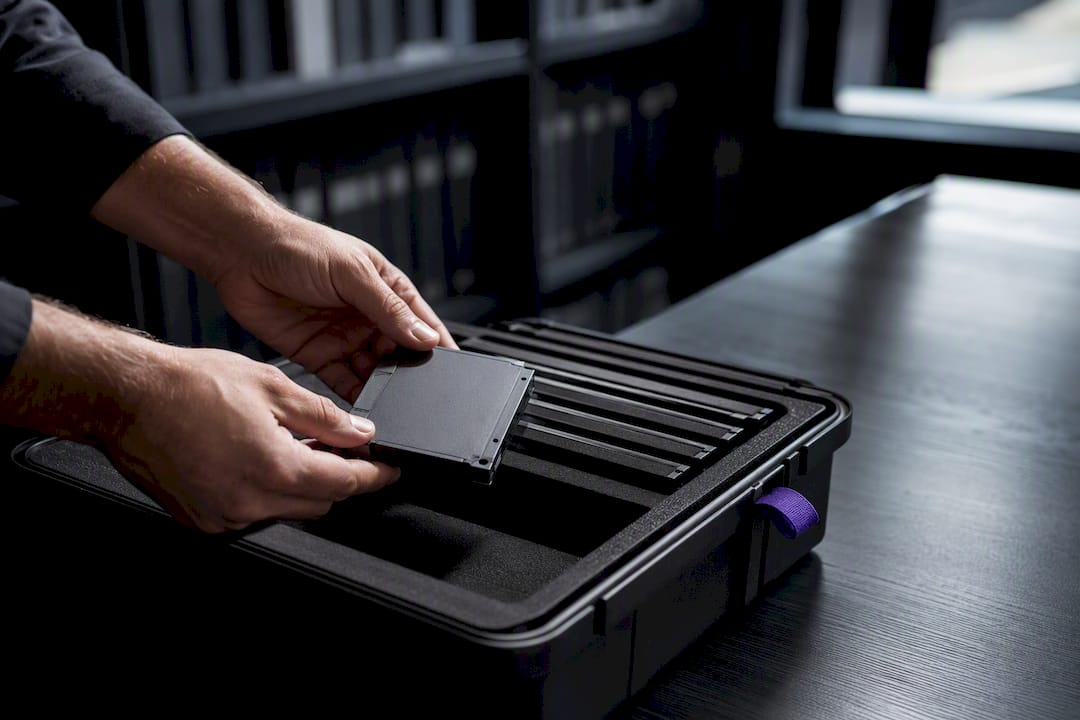
Use the OpenClaw CLI: run openclaw backup create for full archives, openclaw backup sqlite for per-database snapshots, and openclaw backup git for versioned dumps. Always run openclaw backup verify before you trust an archive, and restore only into a fresh, empty directory while the Gateway is stopped. Encrypt every backup, store a copy offsite, and automate the whole cycle with cron or a Gateway-owned schedule.
***
> TL;DR:
>
> - Full backups include all state, configuration, and session data, but are resource-intensive for large workspaces; use SQLite snapshots for frequent, smaller checkpoints.
> - Always verify backups immediately after creation and restore only into empty, freshly-stopped directories to prevent corruption and partial overwrites.
> - Use encrypted offsite storage with strong access controls, and consider deduplicating tools for large or retention-heavy archives to control costs.
> - Automated schedules with gateway-owned setups or cron jobs help ensure regular backups, but require careful logging and retention management.
> - Litestream provides low-loss, continuous replication for live database streaming but does not replace full backups of configuration or credentials.
***
Table of Contents
- How Do You Create, Verify, and Restore an OpenClaw Backup?
- When Should You Use SQLite Snapshots Instead of a Full Archive?
- How Does Git-Backed Backup Work for OpenClaw?
- Can Litestream Replace Scheduled OpenClaw Backups?
- What's the Best Way to Automate OpenClaw Backup Scheduling?
- Where Should You Store Encrypted OpenClaw Backups?
- What Is the Correct Sequence for Restoring an OpenClaw Backup?
- What Mistakes Should You Avoid With OpenClaw Backups?
- When Does Self-Managed Backup Make Sense, and When Doesn't It?
- Skip the Backup Maintenance and Get It Automated
- Where to Go Deeper on OpenClaw Backups
- Sources
How Do You Create, Verify, and Restore an OpenClaw Backup?
openclaw backup create is the command you reach for when you want everything: state, config, auth profiles, channel credentials, session history, and (by default) your workspaces. Under the hood it captures the SQLite databases through the SQLite online backup API, so it doesn't need to freeze the process to get a consistent copy.
Here's the practical sequence we recommend running on any OpenClaw instance:
openclaw backup create --output /backups/openclaw.tar.gzwrites a timestamped.tar.gzarchive with amanifest.jsondescribing exactly what's inside.- Add
--only-configwhen you just need settings and credentials, or--no-include-workspaceto skip large project directories and shrink the file. - Run
--dry-run --jsonfirst if you want to see what would be archived without writing files to disk. - Immediately run
openclaw backup verify /backups/openclaw-2026-01.tar.gz. This checks the manifest shape, confirms SQLite snapshot integrity via SHA-256, rejects unsafe symlinks or path traversal, and reports any skipped volatile files. - To restore, point the CLI at a brand-new directory:
openclaw backup restore /backups/openclaw-2026-01.tar.gz --target /restore/staging.
The restore command will refuse to touch a directory that already has files in it. That's intentional. There's no --force flag to override it, and for good reason: a partial overwrite of a live state directory is how you turn a bad day into a lost week.
When Should You Use SQLite Snapshots Instead of a Full Archive?
Full archives are the right default, but they can be resource-intensive to run frequently if your workspace is large. openclaw backup sqlite create snapshots just the databases, either globally or scoped to a single agent.
Each snapshot lands in its own directory with a manifest.json and a database.sqlite file. Before writing it, OpenClaw vacuums the database, which shrinks the file and defragments it, and then records a SHA-256 checksum you can check against later.
- Use snapshots when your workspace files are large but change infrequently, so a full archive every time wastes bandwidth.
- Use snapshots when you need frequent, low-overhead checkpoints of active conversation state.
- Verify with
openclaw backup sqlite verifybefore you rely on any snapshot for recovery. - Restore with
openclaw backup sqlite restore, following the same fresh-directory rule as full archives.--target
Statistic Callout: The verify step checks SHA-256 hashes against the snapshot manifest, which means a corrupted or truncated database file gets caught before restore, not during it.
How Does Git-Backed Backup Work for OpenClaw?
openclaw backup git create --all --push dumps your OpenClaw state as deterministic, per-table JSONL files and commits them to a repository. The word "deterministic" matters here: because the dump format is stable, Git only records what actually changed between runs, not the entire dataset every time.
That's the real advantage over a fresh .tar.gz every day. A workspace with a few hundred megabytes of session history might only push a few kilobytes of diff on a quiet day, which keeps your remote lean and your restore history genuinely versioned rather than just duplicated.
- Initialize a dedicated private repository before your first
create --pushrun. Never point this at a public remote. --exclude-secrets(the default) keeps credential tables out of the commit history entirely.--include-secretspushes them, which means anyone with repo access can read live tokens, so restrict collaborators accordingly.- Retention is your job here. Git history grows forever unless you prune old commits or squash periodically.
Pro Tip: *If you use --exclude-secrets, plan for manual re-pairing after any restore from that repo. The git-backed workflow won't have your channel credentials to restore, only the structural state.*
Can Litestream Replace Scheduled OpenClaw Backups?
Litestream replicates your OpenClaw SQLite databases continuously, streaming only changed pages to S3-compatible storage as they're written. It requires WAL mode enabled on the database, and it needs a supervised process running alongside OpenClaw, not a cron job that fires once a day.
The appeal is a dramatically lower recovery point objective. Instead of losing everything since last night's snapshot, you might lose seconds of writes. That's a real advantage for anyone running OpenClaw as a production assistant handling live customer conversations.
- Litestream replicates database bytes, not your config files, credentials, or workspace directories.
- Treat replicated data with the same sensitivity as a full backup. It contains the same session content.
- A minimal
litestream.ymlpoints at your database path and an S3 bucket destination, nothing more elaborate is required to start. - For teams without object storage access,
sqlite3_rsyncoffers scheduled pull-based replication as a lighter alternative.
Litestream is a complement to backup create, not a replacement for it. You still need periodic full archives for config and credentials.
What's the Best Way to Automate OpenClaw Backup Scheduling?
Automation is where most backup plans quietly fail. The command works fine manually. Nobody remembers to run it every day.
- Gateway-owned schedules are the simplest option if you're already running OpenClaw as a managed process. Configure the schedule to call
backup create --push, but confirm your remote origin exists first, since a push schedule with no configured remote will just fail silently. - Cron on Linux or macOS works well for a nightly timestamped archive: a line that runs
openclaw backup create --output /backups/openclaw-$(date +%F).tar.gzand then pipes the result torclone syncoraws s3 syncfor offsite upload. - Windows Task Scheduler needs an explicit user account with the right permissions and a fully qualified path to the OpenClaw binary. PATH issues are the number one reason scheduled tasks silently do nothing on Windows.
Whatever you pick, log the output of every verify run and alert on failures. Rotate archives older than your retention window so storage costs don't creep.
Where Should You Store Encrypted OpenClaw Backups?
Your archive contains live credentials for every channel you've connected: Telegram tokens, Discord bot secrets, WhatsApp session data, all of it. Storing that unencrypted anywhere is a liability, and storing the only copy on the same disk as your live OpenClaw instance defeats the purpose of backing up at all.
- Prefer S3-compatible object storage with versioning enabled, so an accidental overwrite doesn't destroy your history.
- Encrypt with
gpgusing AES-256 before upload, or use asymmetric team keys if multiple people need to restore access. - Keep passphrases in a proper secrets manager, never in a plaintext file next to the backup.
- Restrict bucket access control lists tightly, and rotate every credential in the archive if you suspect any exposure.
- For large workspaces with a lot of unchanged data across snapshots, a deduplicating tool like
resticcan cut storage costs versus repeated full archives.
A provider walkthrough on backing up OpenClaw state to Backblaze B2 shows a working encrypted-upload pipeline if you want a concrete starting point rather than building one from scratch.
Pro Tip: *Recovery is only as good as your weakest link. Encrypting the archive means nothing if the decryption key sits in the same repository as the backup itself.*
What Is the Correct Sequence for Restoring an OpenClaw Backup?
Restoring out of order is how backups turn into new problems. Follow this sequence every time, whether you're recovering from disaster or migrating to new hardware.
- Decrypt the archive if it's encrypted, then run
openclaw backup restore. The target must be empty and outside any live state path.--target - Stop the Gateway completely before touching anything else.
- Move the restored files into place, or point
OPENCLAW_STATE_DIRat the new directory, and set correct ownership and file permissions. - Start the Gateway, then immediately run
openclaw healthandopenclaw doctorto catch anything that didn't come back cleanly. - Reinstall plugin dependencies. Archives don't include
node_modulesdirectories, so plugins need a fresh install pass. - Re-pair channels that use ratcheting credentials, WhatsApp being the clearest example, since a restore effectively rewinds session state and the live service won't accept the old token.
Statistic Callout: Restores behave like time travel for messaging credentials: any channel using forward-ratcheting encryption will need manual relinking after activation, because the restored state predates whatever key rotation happened since your last backup.
Document this checklist in your own disaster recovery playbook rather than relying on memory during an actual outage.
What Mistakes Should You Avoid With OpenClaw Backups?
- Never copy live SQLite files directly with
cporrsync. Use the CLI snapshot command or an online-backup-aware tool instead, since a raw file copy mid-write can corrupt the database. - Verify every archive immediately after creation. An unverified backup is a guess, not a safety net.
- Run a staged restore test on a real schedule, not just when something breaks. A backup you've never restored is unproven.
- Keep at least two copies of every backup, with one stored offsite from your production server.
- Watch verification logs for a nonzero
skippedVolatileCount. It's usually harmless, but a sudden spike is worth investigating.
Pro Tip: *Set a recurring calendar reminder to actually run a restore, not just a verify. The gap between "the archive checksums out" and "the restored instance boots and reconnects" is where most disaster recovery plans quietly fall apart.*
When Does Self-Managed Backup Make Sense, and When Doesn't It?
Self-hosting gives you full control over your backup cadence, storage location, and encryption keys, and for some teams that control is worth the overhead. But it demands real discipline: scheduled automation, monitoring for verify failures, and periodic staged restores you actually run, not just plan to run.
For teams that can't commit to that cycle, ClawBase's managed hosting removes the operational burden entirely, with daily encrypted backups and one-click restore handled automatically. If disaster recovery testing keeps sliding off your calendar, that's the clearest sign managed hosting reduces more risk than it costs.
> *— Iosif Peterfi*
Skip the Backup Maintenance and Get It Automated
Every workflow above works, but it only protects you if someone actually runs it, checks the verify logs, and tests a restore every quarter. Clawbase's managed OpenClaw hosting builds that entire cycle in from day one: daily encrypted backups, automated restore paths, persistent memory management, and 99.9% uptime, without you writing a single cron line.
That means no gpg key rotation to track, no S3 bucket permissions to audit, and no staged restore test you have to remember to schedule. You still get access to over 50 AI models with multimodel routing, plus native connections to Telegram, Discord, Slack, and WhatsApp, all running on a dedicated server you never have to patch or babysit. If you're weighing your own backup automation against handing it off, browse real OpenClaw use cases to see what teams run once the infrastructure stops being their problem, then start the 7-day trial on Clawbase to see your own instance backed up automatically from the first day.
Where to Go Deeper on OpenClaw Backups
- The official OpenClaw backup CLI reference documents every flag for
create,verify, andrestore. - The install guide's backup section covers SQLite snapshots, Git-backed dumps, and Litestream configuration in depth.
- The Backblaze B2 tutorial and the community one-click backup project offer working examples worth studying before you build your own pipeline.
Sources
- Backup - OpenClaw
- Backups — OpenClaw install guide (docs2)
- Back Up Your Entire OpenClaw State to Backblaze B2
- LeoYeAI/openclaw-backup: One-click backup & restore for OpenClaw